
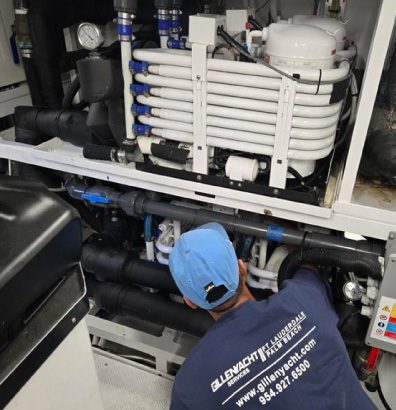
Scale and biofilm buildup inside the condenser cooling coil is one of the most common causes of poor cooling performance we see—and it presents exactly like a low refrigerant charge.
Before anyone calls for a refrigerant diagnosis, it’s worth ruling out the condenser cooling coil first. A quick flow and condenser temperature test tells you everything.
A dead pump is obvious. A degraded one is the problem.
If your system runs a bronze pump, the culprit is almost always the impeller—and a worn impeller doesn’t always look worn. Place it next to a new one, and the difference is clear. On its own, it can pass a visual inspection and still be well past its service life.
When flow drops, head pressure climbs, the compressor starts working harder than it should, and by the time something feels off, the damage is already done. There’s no warning light for “almost enough cooling water.”
We replace bronze impellers annually on every South Florida vessel we manage, regardless of apparent condition.
It’s not a repair. It’s a scheduled part swap that costs a fraction of what it protects.
The chiller gets all the attention, but the air handlers are where the cold air actually enters the cabin—and they have their own failure points.
Evaporator coils accumulate dust and salt-air buildup that act as insulation and reduce efficiency. Blower motors degrade gradually, moving air but not enough of it. And condensate drains clog quietly. In South Florida humidity, that moisture has to go somewhere, and when the drain is restricted, it ends up in your liner or behind your cabinetry.
We inspect coil condition, blower function, and condensate drainage on every unit.
If the rest of the system checks out and the cabin still isn’t cooling as it should, the air handlers are usually where we find the issue.
If you’re dealing with recurring buildup and fouling throughout your system, ask us about ElectroSea®—an electrode-based treatment system that eliminates biological and mineral fouling before it becomes a problem.
No chemicals. No acid. Nothing corrosive. Just clean flow all season.
Marine air conditioning systems in South Florida should be professionally serviced at least once a year. However, yachts that are used frequently, remain in the water year-round, or operate in warm, high-salinity environments often benefit from service every six months to maintain peak performance and help prevent unexpected failures.
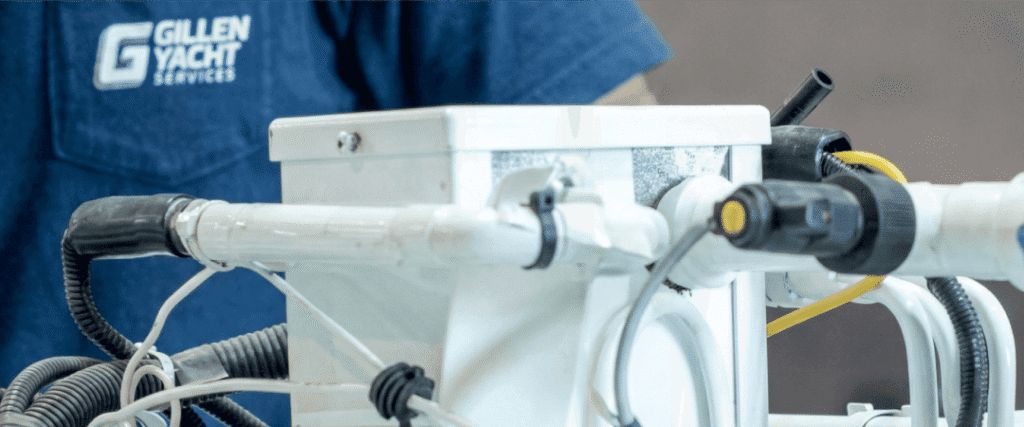
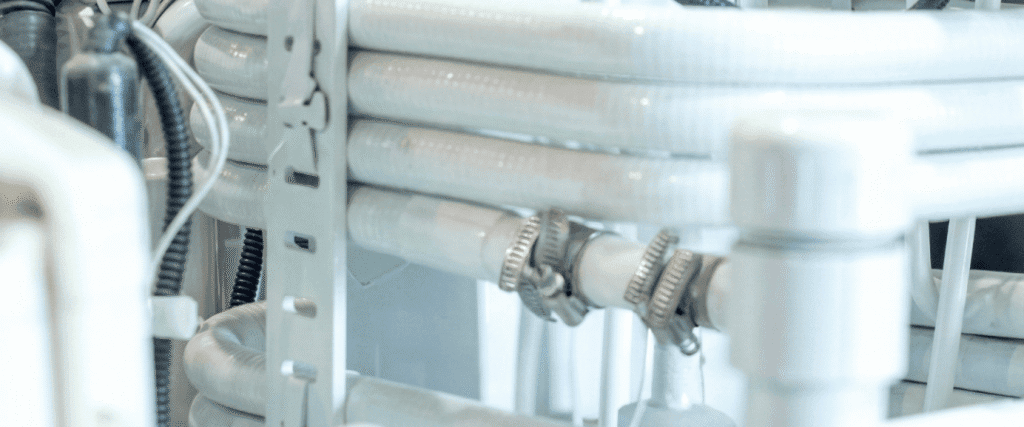
The cooling loop requires antifreeze—not just for freeze protection, but also because it’s your primary corrosion inhibitor.
If the concentration drops, you lose both.
Most chilled water systems develop minor leaks over time. The crew manages it—there’s usually a valve to top off the loop and keep pressure normal. But every time you add water without adding antifreeze, you’re diluting the mixture.
Eventually, the concentration drops below the level that protects the condensing unit, and if the system faults at the wrong moment, you’re looking at a frozen condenser and serious damage.
If your crew is regularly topping off the cooling loop, that’s not routine maintenance—it’s a symptom worth chasing down.
Every chilled water service call we do includes a glycol concentration test so you know exactly where your protection stands.
The loop chemistry issue is only part of the conversation.
Most multi-chiller setups default to the same lead unit running at full capacity all summer while the others barely turn.
That lead unit ages out years ahead of schedule—and the backup units haven’t been adequately exercised.
We see amazing results when we install a PLC-based Lead-Lag rotation controller that distributes runtime evenly, keeps peak electrical load down, and turns your theoretical redundancy into something you can actually rely on.
If you haven’t addressed either of these, both are worth a conversation.
Before anything gets replaced, we check every electrical connection in the system.
You’d be surprised how many board replacements we’ve avoided with a wire brush, dielectric grease, and fresh terminal connections.
Salt air and moisture create corrosion at electrical terminals long before electronic components actually fail. Before replacing expensive controls, we inspect every terminal, contractor, wire connection, and control board connection to determine whether the issue is truly a failed component—or simply a poor electrical connection.
We specialize in Aqua Air systems and have been servicing and repairing them throughout South Florida for decades.
Whether your vessel uses Aqua Air, a chilled-water system, or another marine HVAC platform, our experienced technicians understand the unique challenges of keeping these systems operating reliably in one of the world’s harshest marine environments.
So if you’re running Aqua Air, you’re in the right hands.
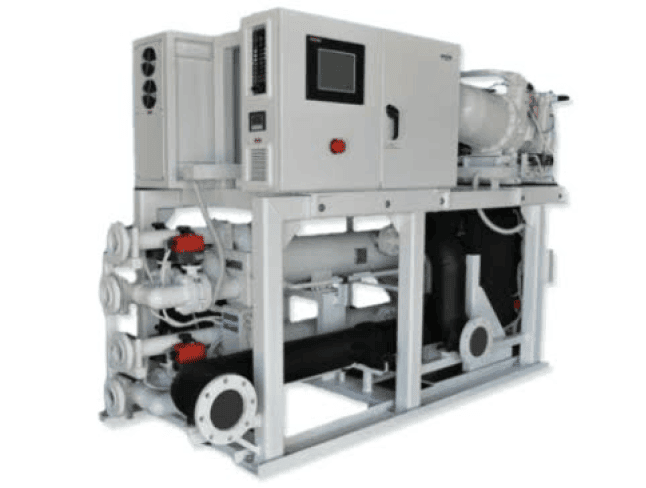
Unlike basic maintenance visits, every HVAC inspection from Gillen Yacht Services includes a comprehensive evaluation of your cooling system.
✔️ Condenser water temperature differential and raw water flow verification
✔️ Bronze impeller inspection and replacement, regardless of apparent condition
✔️ Heat exchanger descaling using a non-acid formula
✔️ Glycol concentration test for chilled water systems
✔️ Cooling loop pressure check and leak assessment
✔️ Every electrical connection in the system — terminals, contactors, and control board connections
✔️ Lead-Lag runtime balance review for multi-chiller systems
If anything comes up, you’ll get a straight read — no inflated repair lists. Slots are going fast.
AC is where most conversations start — but it’s rarely the only thing that needs attention once we’re on board. GYS has every trade in-house. That means we can inspect, service, repair, or replace virtually any system on your vessel in a single visit: electrical, mechanical, plumbing, refrigeration, stabilizers, generators, and more.